Saturday, September 27, 2008

First October = First Syawal


P/S:

Baju raya tahun lepas dipakai lagi,
Hari-hari dicuci biar berseri,
Blog diupdate sebagai pengganti diri,
Bukan sengaja lupakan tradisi,
Tapi ikut teknologi di hujung jari.

"SALAM KEMAAFAN DI AIDILFITRI",
Dari Yuzaidi.

Friday, September 26, 2008

Marketing Lesson

I see a gorgeous girl at a party. I go up to her and say, “I am very rich. Marry me!” That’s Direct Marketing.

I'm at a party with a bunch of friends and see a gorgeous girl. One of my friends goes up to her and pointing at me says, “He’s very rich. Marry him.” That’s Advertising.

I see a gorgeous girl at a party. I go up to her and get her telephone number. The next day I call her and say, “Hi, I’m very rich. Marry me.” That’s Telemarketing.

I see a gorgeous girl at a party. I go up to her and say, “I’m rich. Marry me.” She gives me a nice hard slap on my face. That’s Customer Feedback.

P/S: I'm a good marketer...huhu

Sunday, September 21, 2008

Communicate to a being


Verbal communication will get distractions out of my system. Should I call up a friend?

Recent developments in my romantic life is on my mind, big time, today. In fact, they are keeping me from giving my full attention to other important matters and important people. So in order to clear the clouds from this head, I should need to talk it out. Verbal communication has long been one of my strengths, and today I hope it will help to get some distractions out of self system. Probably, call up friends and ask them if I can spill out a few guts to them. Wish they'll say yes -- they always do.

P/S: Thinking to organize break fast with my fellow IBMers today...

Thursday, September 18, 2008

F**k Lah’s economic

SEPT 18 — Wall Street Journal Asia

Opposition leader Datuk Seri Anwar Ibrahim announced this week that he has enough parliamentary support to unseat the current government, led by Prime Minister Datuk Seri Abdullah Ahmad Badawi. If he does, Abdullah's lacklustre economic management will be largely to blame.

The prime minister has not introduced any substantive reforms during his nearly five years in office, preferring to rely instead on opening up the government purse. Under the Ninth Malaysia Plan announced in 2005, he expanded public-sector spending to RM200 billion annually from RM160 billion. In his Midterm Plan Review this year, he increased this outlay to RM240 billion. The national debt now stands at RM285 billion, up from RM192 billion in 2004. The official fiscal deficit has risen to 4.8% of GDP this year, from 3.2% last year. Revenue is being spent faster than it is coming in.

It's hard to argue that these outlays have served the broad public interest. Much of the funding has been channelled to elites in the majority Malay community, under the country's pro-Malay affirmation action programme. That has created discontent with many Malay who don't see the full benefits of the programme, and among the minority Chinese and Indians, who are excluded from it altogether.

Abdullah's stewardship has had a real impact on the economy. Capital flight has risen sharply; Malaysian investment abroad now exceeds inward foreign investment. The Kuala Lumpur stock exchange has lost almost one-fifth of its value this year to date. Malaysia's currency, the ringgit, saw its biggest one-month loss last month since the end of the dollar peg in 2005. Although GDP growth has averaged a robust 5% annual growth under Abdullah, that record is now under threat. Inflation reached a record 8.5% this summer. Job creation has reached record lows, as unemployment, particularly among young majority Malays, remains high. Ironically, only the opposition-led state governments are attracting new foreign investment — and without the federal government's help, no less.

Abdullah's 2004 attempts to promote growth and investment — such as through the promotion of the biotechnology and agricultural industries — have failed. He also fumbled discussions with the United States on a free trade agreement, which have now stalled. What Malaysia really needs is education reform and the liberalisation of its labour markets to improve its economic competitiveness.

The political opposition, in the form of Anwar and his Pakatan Rakyat coalition, have seized on these issues. They have promised to root out corruption and to implement a new economic policy to address the concerns of all ethnic communities in Malaysia. Their platform aims to move beyond populist spending to introduce structural reforms in government procurement programmes and in the management of government-linked companies.

When Abdullah assumed office in 2004, he inherited an economy in need of structural reform. Malaysians have had to pay for his poor stewardship through higher prices, stagnating wages and growing private sector debt. Soon, Abdullah may have to pay the political price for that record.

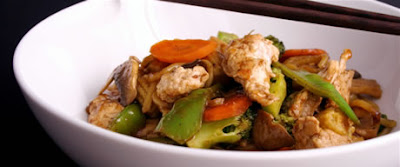
Stay healthy with muslim diet


Some religions have tenets that govern what followers can and cannot eat. Muslims follow a halal diet, or “permissible” foods under Muslim dietary law. Foods that are forbidden are haraam and it's easier to list the foods that aren't allowed instead of what is allowed. The forbidden foods are meat from animals that die from disease or that are not killed by another Muslim, the meat of carnivores, all cuts of pork and pork products including JELL-O, cheeses made with pork renin, and alcohol.

Non-Muslims may think that a halal diet means eating vegetarian if their Muslim friends refuse meat at meals. Some Muslims may choose not to eat meat because they cannot be sure the meat is halal or they may choose to be vegetarian or vegan for other reasons. However, all other meat (chicken, beef, lamb, goat, fish) can be eaten as long as it is prepared accordingly and not contaminated by haraam foods. It's actually easy to eat a healthy and well-balanced diet when following a halal diet, and staying healthy on a Muslim diet is equally as easy.

Here is some more insights on what it means to follow this diet and how to go about staying healthy on a Muslim diet.

Healthy eating
Chapati and rice are staples of the Muslim diet. Chapati is made with whole wheat flour and whole grains tend to be nutrient-dense. They are high in fiber, vitamins and minerals and tend to have a low glycemic index. Eating more whole grains is associated with improved insulin sensitivity, better glycemic control and a reduced risk of cancer and cardiovascular disease, and it’s good for staying healthy on a Muslim diet. Eating chapati filled with vegetables and beans is a very healthy meal and can provide adequate amounts of fiber and protein.

When preparing rice, choose brown rice over white for its glycemic index. Brown rice won’t cause a rapid spike in blood sugar; it will provide fuel for your workout and keep you full longer. Rice and beans is a common meal across all cultures. They are complementary proteins and, when combined, they can provide all nine essential amino acids that are found in animal proteins.

Benefits of spices
Halal food is often prepared with an abundance of spice. The most common spice used is curry. Curry powder does have health benefits, and contributes to one staying healthy on a Muslim diet. Turmeric is an ingredient in curry that is an antioxidant and can lower the risk of developing colon cancer, heart disease and arthritis. There is another benefit to eating spicy foods; capsaicin found in hot peppers helps curb appetite and increases metabolic activity because it is a thermogenic agent. That can be a plus if you find yourself always reaching for unhealthy snacks with very low nutrient value. So, if you love the spicy foods you can prepare on a halal diet, go for it. You can add spice and flavor to meals by using ginger, curry, paprika, and red pepper. However, beware of some of the spice mixes; they are high in sodium.

If you work out, over time, the combined benefits of spicy food and strength training can increase metabolism. This is just one of the many ways staying healthy on a Muslim diet is possible.

Portion size
The halal diet encourages healthy eating, but it is important to eat enough. A 165 pound man needs approximately 2,800 to 3,200 calories a day to maintain his weight. The average man needs to ingest one gram of protein per kilogram of body weight. Adequate amounts of protein can be obtained from beans, nuts, eggs, yogurt, milk, and cheese. You need protein to build and repair muscle, skin and hair, but you don't have to overdo it. Roughly 25% to 30% of your calories should come from protein. One cup of milk has eight grams of protein. An eight ounce container of yogurt has about 11 grams of protein, a cup of beans has 16 grams of protein, and a three ounce cut of meat has about 21 grams of protein. The other 60% of your total daily calories should come from complex carbs and 10% to 15% should come from fats.

Losing weight on a Muslim diet
If you’re trying to lose weight, don't skip meals. Your body will assume it’s starving and your metabolism will slow down. This is counterproductive. Instead, cut calories by 500 per day. That will equal one pound of weight loss per week, which is healthy. To gain weight, increase your diet by 500 calories for a healthy weight gain of one to two pounds a week. Be sure to eat complex, not simple, carbohydrates. Choose low glycemic foods; they won't spike blood sugar too quickly. Cook with healthy fats, such as olive oil or canola oil. After your workouts, choose post-workout meals to replace utilized carbs and protein; a peanut butter and jelly sandwich is a good balance of protein and carbs.
healthy eating

P/S: As with any diet, when eating according to Muslim law on a halal diet, be sure you’re eating everything in moderation to stay healthy.